Nausea & Vomiting
The most reported GLP-1 side effect — especially in the first weeks after a dose increase. There are real, practical ways to manage it so it doesn't derail your day.
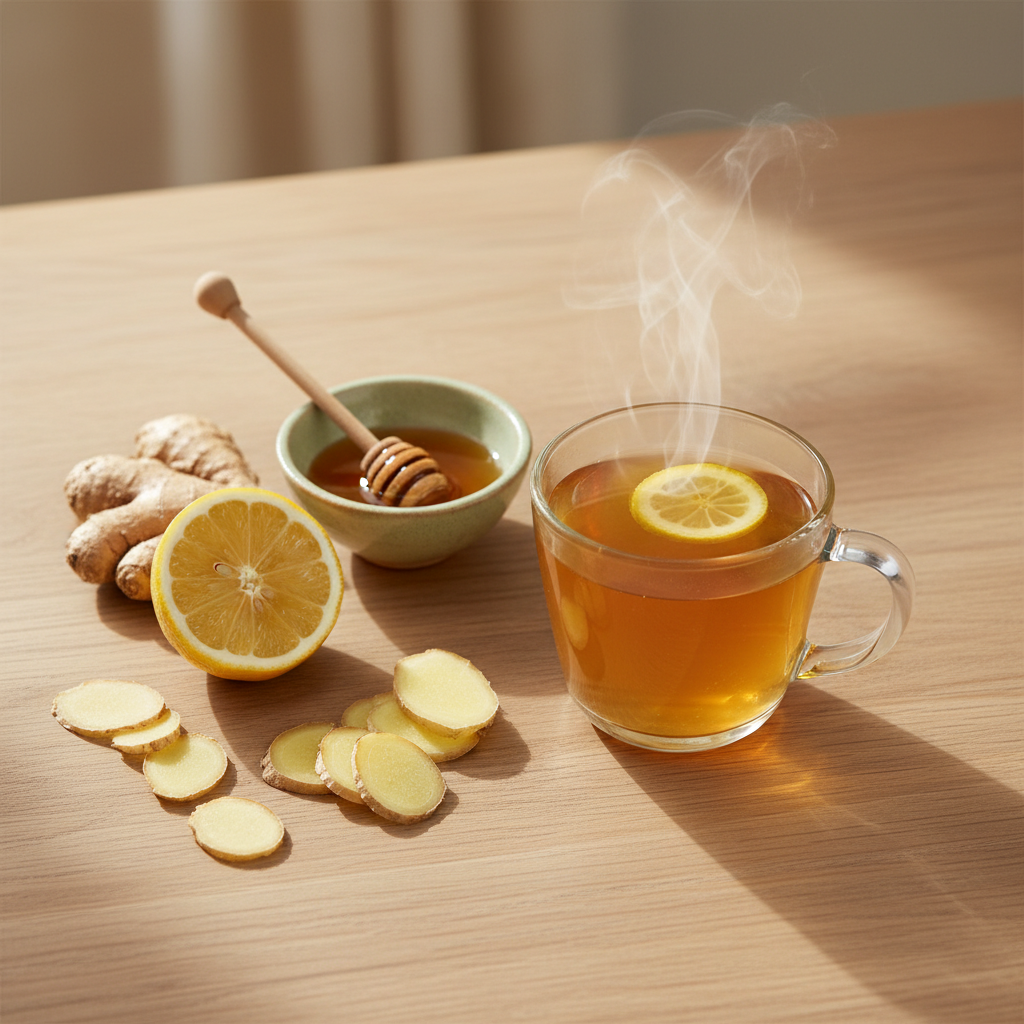
There's solid research showing that pairing ginger with Vitamin B6 (also called pyridoxine) works better at calming your stomach and easing nausea than using either one by itself. Studies from double-blind trials — meaning neither the researchers nor the participants knew who was getting the real treatment versus a placebo (a dummy pill with no active ingredient) — suggest this combo can be nearly as effective as standard prescription anti-nausea medications, with a real drop in both nausea scores and how often people actually vomited. For those who want to try it, some clinicians suggest a starting point of 250 milligrams of ginger up to four times a day, paired with 10–25 milligrams of Vitamin B6 taken up to three times a day, making sure your total B6 for the day doesn't go over 100 milligrams so you don't risk irritating your nerves. Ranges vary by individual — discuss with your care team before starting any supplement routine.
Beyond what's happening in your stomach, it helps to know that GLP-1 nausea is also triggered by the medication directly switching on receptors in a part of your brain called the area postrema — that's the control center that triggers the vomiting reflex. To help calm those signals, peppermint leaf (in tea or candies) works as a natural antispasmodic, meaning it helps relax the muscles in your digestive tract and can ease the cramping or gas that often comes along with the nausea. And because everyone's sensitivity to these brain signals is a little different, keeping a simple food and symptom diary can help you spot and avoid your own personal triggers — things like strong food smells or stressful moments — that might be making your symptoms worse.
Deep dive
Why do GLP-1 & Incretin-based Drugs Cause Nausea?
GLP-1 medications work partly by slowing gastric emptying — food stays in your stomach longer. When you eat your usual portions, your stomach feels overwhelmed and signals nausea. This is most intense on dose day and the day after, and often improves as your body adjusts to each new dose level. It's not a sign something is wrong — it's a sign the medication is doing its job.
What actually helps nausea from GLP-1s?
Eat smaller amounts more frequently rather than three full meals. Choose bland, low-fat foods — crackers, toast, plain rice, or broth — especially on dose days. Avoid greasy, spicy, or very sweet foods, which slow gastric emptying even more. Ginger (tea, chews, or capsules) is one of the best-studied natural remedies for nausea. Staying upright for at least 30 minutes after eating helps enormously.
When should you call your clinician about nausea?
Mild nausea is expected. Call your care team if nausea is severe enough to prevent any food or fluid intake for more than 24 hours, if you're vomiting repeatedly, or if it hasn't improved after 2–3 weeks at a stable dose. Your clinician may slow your titration schedule or recommend an anti-nausea medication — both are common and appropriate options.
Sources
- mymedthrive.com — https://mymedthrive.com/wp-content/uploads/2024/10/MEDThrive-Nutritional-Science-For-GLP-1-Patients-1024.pdf
- fellahealth.com — https://www.fellahealth.com/guide/what-helps-nausea-from-glp-1
- drugs.com — https://www.drugs.com/medical-answers/how-long-glp-1-nausea-how-you-relief-3582388/
- research.tb2.health — https://research.tb2.health/articles/Managing%20the%20gastrointestinal%20side%20effects%20of%20GLP%201%20receptor%20agonists%20in%20obesity%20recommendations%20for%20clinical%20practice.pdf
- clayplattefamily.com — https://www.clayplattefamily.com/images/Handouts/Managing_Side_Effects_of_GLP-1_Medications.pdf
- obesityaction.org — https://www.obesityaction.org/wp-content/uploads/A1371-Clinician-Managing-Side-Effects-Paradigm.pdf